

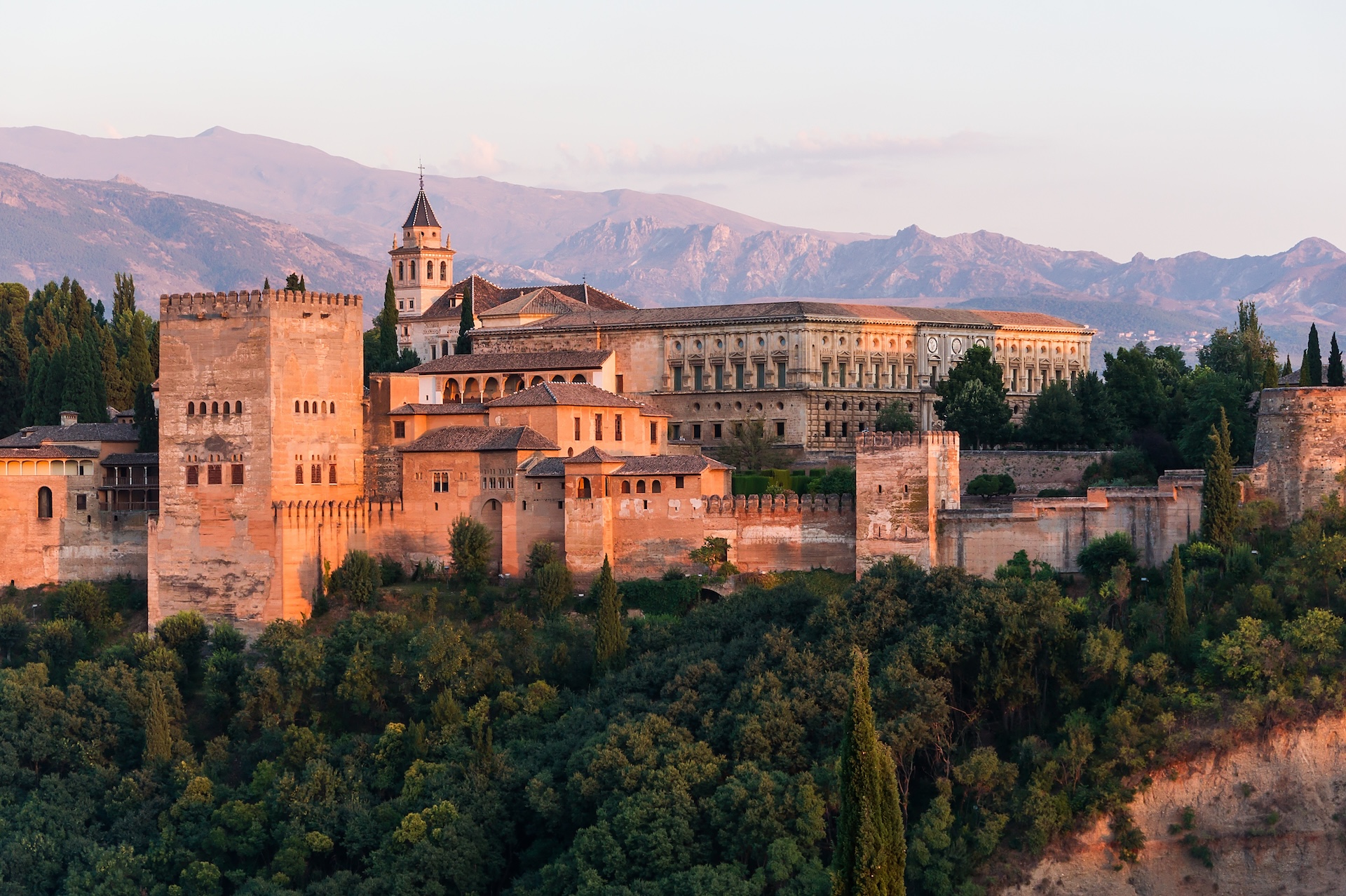

The history of the Alhambra. The Alhambra was a palatine city, a Christian Royal House, the Captaincy General of the Kingdom of Granada and a military fortress until it was declared a national monument in 1870.
Granada, capital of the Nasrid kingdom, gradually received Muslim populations as a result of the advance of the Christian conquest. The city grew and changed, creating new neighbourhoods and extending its walls and fences until its conquest at the end of the 15th century. After 1492, the Alhambra was established as a royal residence. In 1526, Emperor Charles V decided to build the palace that bears his name, together with other very significant buildings in the Roman Renaissance style. With the revolution of 1868, the Alhambra was separated from the Crown and came under the control of the State, and in 1870 it was declared a “national monument”.
The Monumental Complex of the Alhambra and Generalife represents a valuable cultural landscape, a large environmental unit, formed by different units of vegetation capable of harbouring a rich and varied biodiversity.